
Acutely conscious that he's left with less than four years to create his legacy, Trump is undoubtedly a man in a hurry, observes Ambassador M K Bhadrakumar.

'Could the impending new crisis, vibe coding, similarly create not a disaster like what befell Indian handlooms during the Industrial Revolution but another opportunity like what the Y2K crisis created?' asks Ajit Balakrishnan.

OPEC expects an additional daily average output growth of 1.2 million barrels or a daily average oil output of 87 million barrels in 2008. The OPEC output quota this year will be less than 32 million bpd and non-OPEC output would be about 50.3 million bpd, according to a report . OPEC's actual production will be higher than the quota but that will not be sufficient to coverup the demand-supply imbalance in the international market.
OPEC, which has oil reserves that constitute 80 percent of the total global reserves, is unwilling to increase output to bring down oil prices. This makes OPEC too responsible for the rising oil prices, apart from the weak dollar. OPEC has said that world oil demand this year is forecast to grow by 1.2 million barrels daily to an average of 87 million barrels per day. As OPEC's output remains insufficient to cover rising demand from Asian region, oil prices will tend to rise.

From the 30 blue-chip Sensex pack, Tech Mahindra, IndusInd Bank, Axis Bank, Mahindra & Mahindra, Tata Motors, Larsen & Toubro, State Bank of India, Tata Consultancy Services, UltraTech Cement and Reliance Industries were the biggest laggards. In contrast, JSW Steel, Nestle and Titan were the gainers.

India and the US had on July 17 signed a preliminary agreement for cooperating on emergency crude oil reserves, including the possibility of India storing oil in the US emergency stockpile.

The US Fed interest rate decision, inflation data and FIIs are the key factors that are expected to drive stock markets this week, analysts said. Global trends will also be tracked by investors for further cues, they added. "The Indian stock market's future trajectory will be influenced by a blend of global and domestic factors.
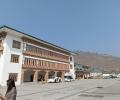
The visitor returns not just with the jewel-like beauty of the country imprinted on the mind, the body rejuvenated by hot stone massages, but also with the captivating stories and myths that are built into every important structure -- whether a tourist magnet or an off-the-beaten track spot.

India is the 4th largest oil consumer after the US, China and Japan.

From the 30-share blue-chip pack, Adani Ports jumped over 5 per cent. NTPC, Tata Steel, Bajaj Finserv, Zomato, Bajaj Finance, Tata Motors, State Bank of India, IndusInd Bank and Maruti were among the other big gainers. From the 30-share pack, Hindustan Unilever, Titan, Tata Consultancy Services, Infosys and UltraTech Cement were the other laggards.
State-owned Oil and Natural Gas Corporation said on Thursday that it has discovered gigantic oil reserves, west of the Vasai gas field, off the Mumbai coast.
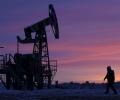
India will soon meet Iraq and the United Arab Emirates (UAE) to seek a definitive rate of discount on crude oil similar to what Russia has provided so far, sources said. Multiple officials and industry executives said Iraq, which is India's biggest oil supplier, wants to discuss the level of discounts expected by Indian refiners. India's focus on snapping up ever-increasing volumes of Russian crude oil has led to a corresponding decline in imports from the Middle East. Flows from Iraq, Saudi Arabia, and the UAE have suffered as a result.

The weaker rupee will push the country's import bill due to higher payments for crude oil, coal, vegetable oil, gold, diamonds, electronics, machinery, plastics, and chemicals, economic think tank GTRI said on Friday. Citing an example, it said the depreciating domestic currency will increase India's gold import bill, especially as global gold prices have jumped 31.25 per cent, rising from $65,877 per kg in January 2024 to $86,464 per kg in January 2025.

Eat meat the way Mughal emperors did and cook up a storm and win hearts with this mutton delight.

Continuing the downward trend, retail inflation fell to a five-month low of 4.31 per cent in January, mainly due to a decline in the prices of vegetables, eggs, and pulses. The Consumer Price Index-based retail inflation was 5.22 per cent in December and 5.1 per cent in January 2024. The previous low inflation was in August 2024 at 3.65 per cent.
Saudi Arabia, the world's largest oil exporter, is reported to be investing $4-5 billion in the force

From the 30-share pack, Adani Port, Bharti Airtel, Asian Paints, IndusInd Bank, Bajaj Finserv, Reliance Industries, Infosys, UltraTech Cement, HDFC Bank, HCL Technologies and ICICI Bank were among the laggards. Tata Motors, Axis Bank, Maruti, Larsen & Toubro, ITC and Tata Steel were among the gainers.
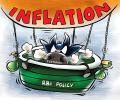
Retail inflation slipped to seven-month low of 3.61 per cent in February mainly due to easing prices of vegetables, eggs, and other protein-rich items, creating space for the RBI to go for another cut in interest rate next month.

State Bank of India, Adani Ports, Tata Consultancy Services, ICICI Bank, Reliance Industries and PowerGrid were also among the laggards.

In an eventful week ahead, stock market investors will take cues from major events like the US Federal Reserve's interest rate decision, the upcoming Union Budget and Q3 earnings, analysts said.

Faced with one setback after another in expanding the scope of mining in the country, almost all the major miners of the world have wound down their operations in India.
British energy firm Cairn Energy Plc has again struck oil in Rajasthan, its ninth discovery in the state in the last two years.

Equity benchmark Sensex on Thursday plunged about 965 points to crash below the 80,000 level due to heavy selling in global equities after the US Federal Reserve signalled fewer rate cuts next year. Besides, deep losses in consumer durables, banking and IT stocks amid foreign fund outflows added to the gloom, analysts said.
ONGC Videsh, the overseas investment arm of state-owned Oil and Natural Gas Corporation, is one of 41 global oil corporations shortlisted by the Iraq government to develop its oil fields. Iraq has the world's largest proven oil reserves.

Putin is keen on establishing a good personal rapport with Trump and anchor a meaningful US-Russia partnership, realistic enough to accept that Trump is as good an American president as Russia would ever get, observes Ambassador M K Bhadrakumar.

All sectoral indices ended lower. BSE Telecommunication tanked 2.18 per cent, metal (1.77 per cent), auto (1.70 per cent), energy (1.64 per cent), oil & gas (1.59 per cent), commodities (1.39 per cent) and financial services (1.37 per cent) were the major laggards.

Ahead of a meeting of oil producers' cartel OPEC, India on Tuesday said the current oil prices are "very challenging" and rates need to be a "little bit sober" lest they impact a consumption-led recovery of the global economy. Oil Minister Dharmendra Pradhan, who last week again urged OPEC to phase out its production cuts, said India is a price-sensitive market and it will buy oil wherever it gets competitive rates. The rebound in international oil prices from lows hit last month on the back of demand recovery has led to a spike in petrol and diesel retail prices in India.
Oil occurs in certain geologic formations at varying depths in the earth's crust, and in many cases elaborate, expensive equipment is required to get it from there. Read below all you need to know about the oil industry in the world.
The Cabinet on Wednesday approved construction of strategic oil storage facilities at three locations on east and west coast at an estimated cost of over Rs 1,600 crore.
Higher discounts on crude oil offered by the United Arab Emirates (UAE) to wean India away from Russian crude may soon see Indian refiners ramping up purchases from the Gulf nation, officials at multiple refiners said. They also pointed to the recent agreement on trade settlement in national currencies signed between India and the UAE as a reason for this. "While discussions are underway, the UAE has offered discounts on crude, which will be more than that of the current level of Russian discounts.
ONGC Videsh Ltd, the overseas investment arm of India's largest oil producer Oil and Natural Gas Corporation, is planning to bid for a "few" of the 19 exploration blocks being offered under two bidding rounds by Iraq, which has the world's third-largest oil reserves.
OVL, along with global oil majors such as Royal Dutch Shell, ExxonMobil, Chevron, ConocoPhillips, British Petroleum, Total and China National Petroleum Corporation, is one of the 35 companies short-listed by the Iraqi government for the auction, which includes six oil-producing blocks with recoverable reserves of 40 billion barrels of oil, making it the largest such auction in the world.

The rupee tumbled 3 per cent against the US dollar in 2024 as concerns over slower economic growth and a stronger greenback in global markets weighed, but it was among the least volatile currencies in the world and the headwinds may be less intense in the coming year.

As RBI governor, Sanjay Malhotra will have to give the highest priority to the interest of the economy while deciding on the growth-inflation trade off at Mint Street.
Sri Lanka's Parliament on Wednesday approved the private sector participation in oil and gas exploration, paving way for the Indian companies to invest in the island nation.
From the 30-share Sensex pack, Tata Motors, Tech Mahindra, UltraTech Cement, JSW Steel, Sun Pharma, Asian Paints, IndusInd Bank and ICICI Bank were the major losers. State Bank of India emerged as the only gainer from the pack.

From the 30-share Sensex pack, Mahindra & Mahindra, Tata Steel, Adani Ports, JSW Steel, IndusInd Bank, Reliance Industries, HDFC Bank and Kotak Mahindra Bank were the biggest laggards. Tata Motors, NTPC, Hindustan Unilever, Asian Paints and Infosys were the gainers.

Vedanta's Cairn Oil & Gas on Thursday announced the appointment of Nick Walker as the new chief executive officer (CEO) of the company. In a statement, the company said the appointment is effective January 5. "Before this appointment, Walker was president and chief executive officer at Lundin Energy, one of the leading European independent E&P companies," it said.
